

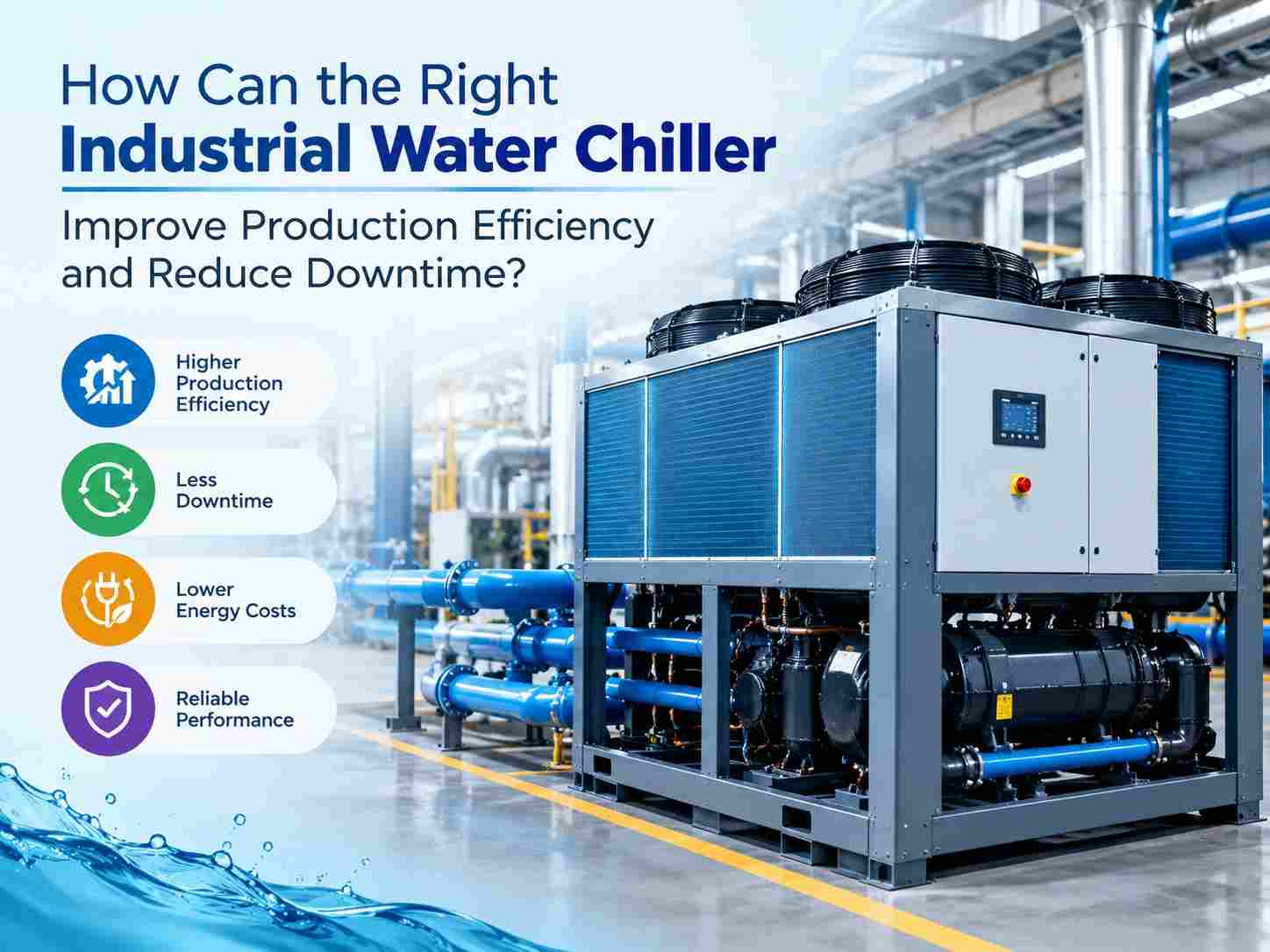
How Can the Right Industrial Water Chiller Improve Production Efficiency and Reduce Downtime?
Temperature control is critical to manufacturing for production uniformity and for the reliability of manufacturing equipment. High temperatures may cause damage to equipment, lower product quality and lead to unexpected downtime. Deciding on the right industrial water chillers can contribute to businesses controlling process temperatures, protecting their equipment, and ensuring smoother operations. For manufacturers utilizing heat-sensitive materials or equipment, a reliable cooling system can be a valuable investment to their productivity.
Earth Cooling System is an education program that explains the needs of the businesses for cooling and gives them the possibility to identify solutions for the cooling solutions that are appropriate for their industrial applications. Using the appropriate equipment for a specific production can keep energy use to a minimum, reduce equipment downtime and ensure uniformity in cooling.
Why Is Industrial Cooling Important in Manufacturing?
Heat is produced in industrial processes by the operation of machinery, processing of materials, friction, chemical reactions, etc. If cooling is not adequate, the temperatures can rise above the recommended operating range causing production losses and damage to equipment.
The industrially dependable cooling systems will help remove the extra heat and keep the system running at a steady temperature. Many industries, including plastics, pharmaceuticals, food processing, chemicals and engineering, rely on controlled temperatures for various manufacturing processes.
With effective cooling management, companies can minimise disruptions due to heat and ensure more stable production processes. The right system also eliminates the need for manufacturers to operate their equipment under unnecessarily harsh conditions to maintain consistent processing conditions.
How the Right Industrial Water Chiller Improves Efficiency
1. Maintains Consistent Process Temperatures
The changes in temperature can impact on material characteristics, processing time, and product quality. Choosing the correct industrial water chiller ensures the water temperature is kept at the desired level and can also remove surplus heat from the equipment they are linked to.
If plastic moulding is used, for instance, the cooling process must be controlled to ensure uniform product size and production rate. There are other manufacturing processes that require accurate temperature control as well to ensure quality. By selecting the right cooling capacity, businesses can better ensure they are able to provide suitable cooling for them.
2. Reduces Unexpected Production Downtime
Overheating equipment may require manufacturers to stop production, analyze their equipment, or replace parts. These interruptions can cause orders to be delayed, raise labour costs, and impact on delivery schedules.
A well sized cooling system will minimize these risks by providing the production process with the cooling capacity it needs. Correct installation, operating conditions, and regular servicing, however, are also critical to reliable performance.
3. Helps Control Energy Consumption
Cooling equipment can represent a significant portion of electricity costs, especially in day running facilities. It is possible that an undersized system will not keep up with demand, but an oversized system will drive up unnecessary operating expenses.
When selecting industrial chillers, businesses can opt for models that are energy-efficient, allowing them to meet their cooling needs while minimizing energy consumption. Prior to equipment selection, factors such as heat load, ambient temperature, water flow and operating hours should be evaluated. Another way to increase the efficiency of industrial cooling systems is to ensure that the surfaces involved in transferring heat are kept clean and that cooling is not required unnecessarily.
4. Supports Product Quality and Consistent Output
Out-of-control temperatures may result in material defects, inconsistent processing and product reject. These issues can result in more waste and extra production time.
Good manufacturing process cooling can help to ensure stable process (production) conditions in critical areas of production processes. By implementing appropriate temperature control, manufacturers are able to enhance the consistency of their processes, and minimize unnecessary quality problems. Actual results will vary in accordance with materials, machine and cooling requirements.
What Should You Consider Before Choosing a Chiller?
The first step in an effective industrial chiller selection guide is to determine what the facility’s real cooling needs are and not compare equipment prices. Before choosing consider the following factors:
- Cooling capacity: Determine the amount of heat produced by the machine and manufacturing process.
- Temperature requirements: Determine water temperature and operating range.
- Installation conditions: Evaluate space, ventilation and environment.
- Energy efficiency: Evaluate performance with representative operating conditions.
- Maintenance needs: Service accessibility, component availability, routine maintenance requirements.
- Future expansion: Do the production growth have a possibility of increasing the cooling requirement?
By choosing a chiller for industrial applications based on these factors, companies can prevent situations where they end up with inadequate cooling, or extra costs. A good system should be capable of satisfying present production requirements, and still have enough flexibility to accommodate future requirements.
Why Is Regular Chiller Maintenance Important?
No matter how good a cooling system is, it requires periodic maintenance to ensure it operates effectively. Over time, dust buildup and scaling, limited air flow and poor water flow can diminish cooling efficiency.
Regular maintenance of an industrial chiller can aid in detecting problems early on, preventing them from causing expensive downtime. This can involve inspection of water flows, electrical connections, cleaning heat transfer surfaces and operating temperature monitoring.
Unusual noises or unusually long cooling cycles or power spikes should also be monitored by businesses. Any of these symptoms may be a sign that you need a professional inspection. It can help to keep equipment performing to manufacturer’s specifications and extend its lifespan.
Finding the Right Industrial Cooling Solution
Each manufacturing facility is unique on the basis of the creation process, machinery, hours of operation and temperature needs. Businesses can benefit from consulting an experienced cooling solutions provider to assess the available options and decide which equipment is right for their needs.
Earth Cooling System assists companies with cool solutions that match their business needs. Prior to selecting the right Industrial Water Chiller for a business, it is important for them to consider the cooling power that is expected from the chiller, its energy efficiency, installation specifications, and the services required for the long-term use of the chiller.Before making a choice, companies researching Industrial Water Chillers in Haryana or Industrial Water Chillers in Delhi should consider the cooling power that the chiller provides, the energy efficiency, installation specifications, and the services required for the long-term use of the chiller.
Conclusion
The appropriate cooling system can help ensure a dependable production process, consistent production, and minimal heat-related downtime. When selecting the appropriate industrial water chiller, several factors like cooling capacity, energy savings, installation requirements, and maintenance must be taken into account.
Given a proper choice of equipment and preventive servicing, manufacturers can ensure product quality, control operating costs, and yield reliable production. Earth Cooling System can assist companies to explore industrial cooling choices that match their application.

Leave a Reply