

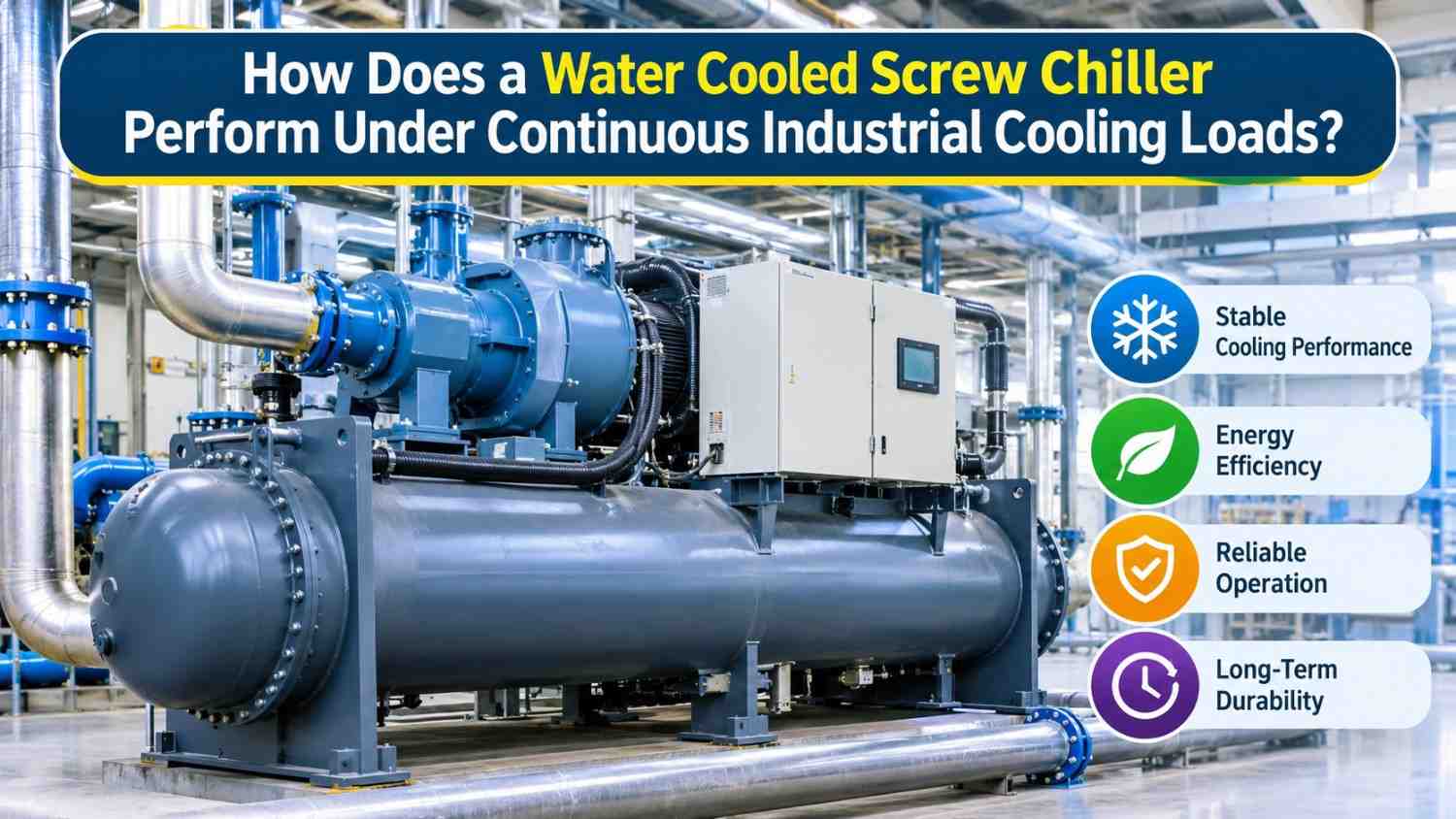
How Does a Water Cooled Screw Chiller Perform Under Continuous Industrial Cooling Loads?
Industrial manufacturing is not given the privilege of shutting down just because temperatures are rising. The processes involved, such as production line operations, processing plants, among others, need to be cooled constantly for many hours. This is because variations in temperature can affect the entire process itself.
A Water Cooled Screw Chiller has great significance in industrial applications. If you are looking to purchase a Water Cooled Screw Chiller in Haryana, knowing how effective Industrial Water Cooled Chillers are, and the importance of performing regular Water Cooled Chiller Maintenance will allow you to make a more informed decision on your purchase.
The Earth Cooling System recognizes the fact that industrial cooling is not just about generating cold water but also entails a lot more, such as ensuring constant temperatures and dealing with variable heat loads.
But how do screw compressors deal with continuous cooling needs in industries? How does efficiency come into play and what can industries do to ensure efficiency for a long period? Let us delve into science.
How Does a Water Cooled Screw Chiller Work?
A water-cooled screw chiller works using a screw compressor that makes use of a constant refrigeration cycle through the refrigerant. Its main purpose is to remove the heat from the chilled water and then move the heat into another circuit of condenser water.
The refrigeration process involves four essential stages:
- Evaporation: The refrigerant extracts the heat from the water flowing in the evaporator thus cooling the water before it flows back into the industrial process.
- Compression: The screw compressor elevates the pressure and temperature of the refrigerant before rejecting the heat.
- Condensation: The condenser releases heat from the refrigerant into the cooling water, where it is normally conducted to a cooling tower.
- Expansion: This is followed by the flow of the refrigerant into an expansion device where its pressure and temperature are lowered.
The cycle will continue for as long as the process is running, delivering cold water to equipment connected to the process.
One of the crucial things to consider is heat rejection. The condenser should be able to reject not only the heat taken in by the system from the process but also the extra heat developed during compression.
The water-cooled screw chillers solutions that you will need under certain conditions can be offered to you by Earth Cooling System.
Why Screw Compressor Technology Suits Continuous Industrial Loads
Industrial production does not require continuous cooling through the whole day in most cases. It depends on the machine operation, amount of product produced, and processing of materials.
The screw compressor features the use of two helical rotors which fit in such a way that their purpose is to compress the refrigerant. The ability of the screw compressor to operate continuously makes it possible for it to vary cooling capacity according to the design.
Most screw chillers have systems to control their capacities through slide valves and variable speed drives for controlling the capacity of refrigeration and not the running of the chiller at full load capacity.
Imagine a factory where there are several production lines that operate simultaneously. When the maximum level of production is achieved, then the machines will be able to generate a lot of heat. This does not happen when machines are changed or during low production levels.
A properly selected industrial screw chiller can respond to these variations through its available capacity-control features.
This offers several practical advantages:
- More efficient load management: Chilled water capacity is adjustable according to the varying process demand.
- Flexibility of operation: The system is able to adapt to any change in production schedule.
- Prevention of inappropriate operation: Capacity control will prevent the system from operating improperly.
- Maintaining the temperature of the process: Control system settings allow maintaining proper chilled water conditions.
On the other hand, good efficiency of the system cannot entirely depend on the compressors only. Other important factors include the size of the system, the state of the refrigerant, water flow, among others.
Industrial Cooling Efficiency and Power Consumption
One of the important issues associated with the selection of industrial refrigeration systems is the issue of energy usage. Because the chillers can work for many hours, any increase in their efficiency can make a big difference in electricity costs.
Heat rejection is accomplished by means of the condenser water loop in the case of water-cooled system. This type of chiller may be more efficient than the air-cooled type depending on how the operation is carried out.
However, actual efficiency depends on the complete installation rather than the chiller alone.
The main factors influencing industrial cooling efficiency include:
- Compressor loading: Operation load and capacity control settings affect electrical energy consumption.
- Condenser water temperature: Low entering condenser water temperature, with respect to the manufacturer’s operating specifications, increases chiller efficiency.
- Water flow: Suitable water flow rates promote efficient heat transfer from the evaporator and condenser.
- Heat exchanger fouling: Scale formation is an extra form of thermal resistance.
- Cooling tower efficiency: Proper heat rejection is essential to create suitable condenser operating conditions.
Furthermore, when the condenser coils are covered with deposits, then the heat exchange becomes less efficient. This means that the compressor will operate at a higher pressure and use more energy.
That is the main reason why the businesses need to gauge the efficiency of the cooling systems, instead of simply measuring the energy usage of the compressors.
Cooling Load Management and Temperature Stability
The process of load control begins with the knowledge of the heat generated by the process, required cold water temperature, and hours of operation.
If the central cooling system is well-designed, the process of transferring chilled water via the same piping will be possible to the different production zones. This will make it easier for the firms to cool different machines and production zones via the same cooling system.
However, effective distribution requires more than installing pipes and pumps.
Engineers must consider:
- Temperature of chilled water supply and return.
- Flow rate requirement for each production area.
- Friction losses in pipes.
- Pump capacity and balancing.
- Temperature-sensing devices and system control.
- Fluctuations in cooling load within the different production areas.
Temperature stability also depends on adequate system capacity and properly configured controls.
However, in situations where low temperatures are needed, glycol chillers may come in handy. While looking for Industrial Water Chillers in Delhi, it is vital to take into account the required temperature of the fluid.
The percentage of glycol requires special attention as an increase in the percentage of glycol normally causes a change in the characteristics of the fluid.
What Affects Thermal Performance During Long Operating Hours?
Chillers running for long hours are continuously exposed to heat and mechanical stress. If the required conditions of operation and maintenance are not met, certain difficulties can arise during the process of using the chillers.
This allows operators to detect any issues that may arise and prevent any major disruption from occurring.
- Condenser Fouling
The accumulation of dirt and other contaminants inside the condenser pipes will affect the transfer of heat.
If heat rejection is inefficient, the pressure in the condenser will increase, which will cause increased stress to the compressor.
Inspection, chemical treatment of water, and cleaning of tubes will ensure the proper working of the heat exchanger.
- Inadequate Water Circulation
Insufficient water flow may affect the heat transfer from the evaporator and condenser. Strainers that are clogged, pump operation issues, and valves that are not completely open and air trapped in the pipes.
Monitoring the flow of water and operation condition of pumps help to maintain water circulation.
- High Cooling Tower Temperatures
The cooling tower is an important piece of equipment in the cooling of condenser water. Improper maintenance and operation of the cooling tower can lead to an increase in condenser water temperature, which will make the compressor work harder and make the cooling less efficient.
The water distribution to the cooling tower, fan and nozzles for spraying water are the variables that are well controlled by regular inspections.
- Incorrect Equipment Sizing
A simple selection of the chiller on the basis of tonnage estimation can lead to some problems. The oversized system will function improperly under some loads, while the undersized one will not be able to meet the peak production requirements.
A proper cooling load calculation will depend on the current heat input into the process, scheduling, expansion plans, and the required temperatures in the future.
- Inadequate Refrigerant and Lubrication Management
The above-discussed variables will affect the performance of the equipment; namely Refrigerant Charge, Lubrication, and Operating Conditions of the Compressor.
Output cooling or the performance of the compressor can be influenced by incorrect refrigerant properties or bad quality of the lubricant.
In case the system is working in the recommended range by the manufacturer for inspections and servicing, then it remains in that range.
Earth Cooling System recognizes the importance of proper evaluation of the cooling loads and selection of the appropriate equipment for proper cooling of the manufacturing plants and other industrial applications.
Water Cooled Chiller Maintenance for Reliable Performance
However, even the best industrial chiller needs proper maintenance in order to perform effectively. The Maintenance of Water Cooled Chillers will include all the cooling process starting from the compressor, evaporator, condenser, pumps, cooling tower, and electrical connections.
Heat Exchanger Inspection: Check for scaling, fouling, or deposits that can restrict heat transfer in the condenser and evaporator.
Refrigerant and Lubricant Monitoring: Check the refrigerant working conditions, find any leakage, and check the state of the lubricating oil in accordance with the manufacturer’s instructions.
Pump and Valve Inspection: Ensure proper water flow, inspect machine components, check for any leaks and vibrations.
Cooling Tower Maintenance: Cleaning the cooling tower, inspecting the fans and nozzles, and carrying out water treatments should be done.
Electrical and Control Checks: Inspect electrical wiring, sensors, safety mechanisms, and control parameters for any emerging issues.
Performance Monitoring: Take temperature readings for cold water, condenser water, pressure, compressor load, and electrical power.
In water cooled units, water quality becomes an important issue. Cooling tower water, if not handled appropriately, may cause scale build-up, corrosion, and biofilm growth.
Over the years, these issues could progress and eventually lead to decreased efficiency of heat transfer and higher maintenance needs.
One maintenance method that should be followed is comparing the current operational parameters with the original commissioning of the equipment. There might be a problem if the condenser approaches temperature, the chilled water temperature difference, or the energy consumption of the compressor changes drastically from the original values.
Water-Cooled Screw Chiller Performance Not Only Depends on Design of Screw Chiller But Also On How Efficiently Whole Installation is Serviced.
How to Choose the Right Industrial Process Chiller
Choosing an industrial process chiller is an important investment. Making a choice based on tons may result in ignoring some of the other factors that come into play while choosing a chiller.
The following points must be kept in mind while selecting a chiller system.
- Calculate the Actual Cooling Load
Determine the overall amount of heat generated during the production process which includes heat from the machinery, heat dissipation from the material, etc.
Proper calculation of load prevents under- and over-sizing of equipment.
- Identify Required Water Temperatures
Take note of the required chilled water supply and return temperatures. Standard chilled water supply may be required by industrial processes, while some may need even lower temperatures.
- Evaluate Operating Conditions
Consider the working hours per day, environment, temperature of condenser water and the capacity of the cooling tower. They will have an effect on the performance and the energy consumption of the chiller.
- Consider Fluid Requirements
Determine whether water or glycol mixtures will be required. Properties of the fluid influence the rate of heat transfer.
- Plan for Future Expansion
If there is going to be an increase in the production capacity, it will be important to take into account the capacity requirements for the cooling process. If it is required to ensure the continuity of the production process, it will be necessary to look at the possibility of installing not one but several chillers.
- Check Maintenance Accessibility
The equipment arrangement should be in such a way that the technicians are able to access compressors, heat exchangers, pumps, and electric components easily.
The Earth Cooling System is providing the right kind of solutions for industrial cooling equipment to businesses that have started to analyze their requirements for cooling systems.
Conclusion: Choose Reliable Industrial Cooling with Earth Cooling System
Continuous industrial cooling requires the right combination of compressor technology, cooling capacity, temperature control and regular maintenance.
There will be satisfactory operation of a screw chiller that operates with water as a coolant in difficult industrial environments, provided that the engineers have done proper designing of the system and operate the system within its parameters. Every factor including efficiency of heat transfer in the condenser to variable demands for cooling comes into account.
Earth Cooling Systems focuses on the needs for cooling in an industrial environment and providing suitable solutions to the problems associated with cooling. Whether you are requiring process cooling, central cooling or water cooling for your industry, the selection of the right equipment could really matter. Visit our Google Business Profile to get more info about our company and our services.

Leave a Reply