

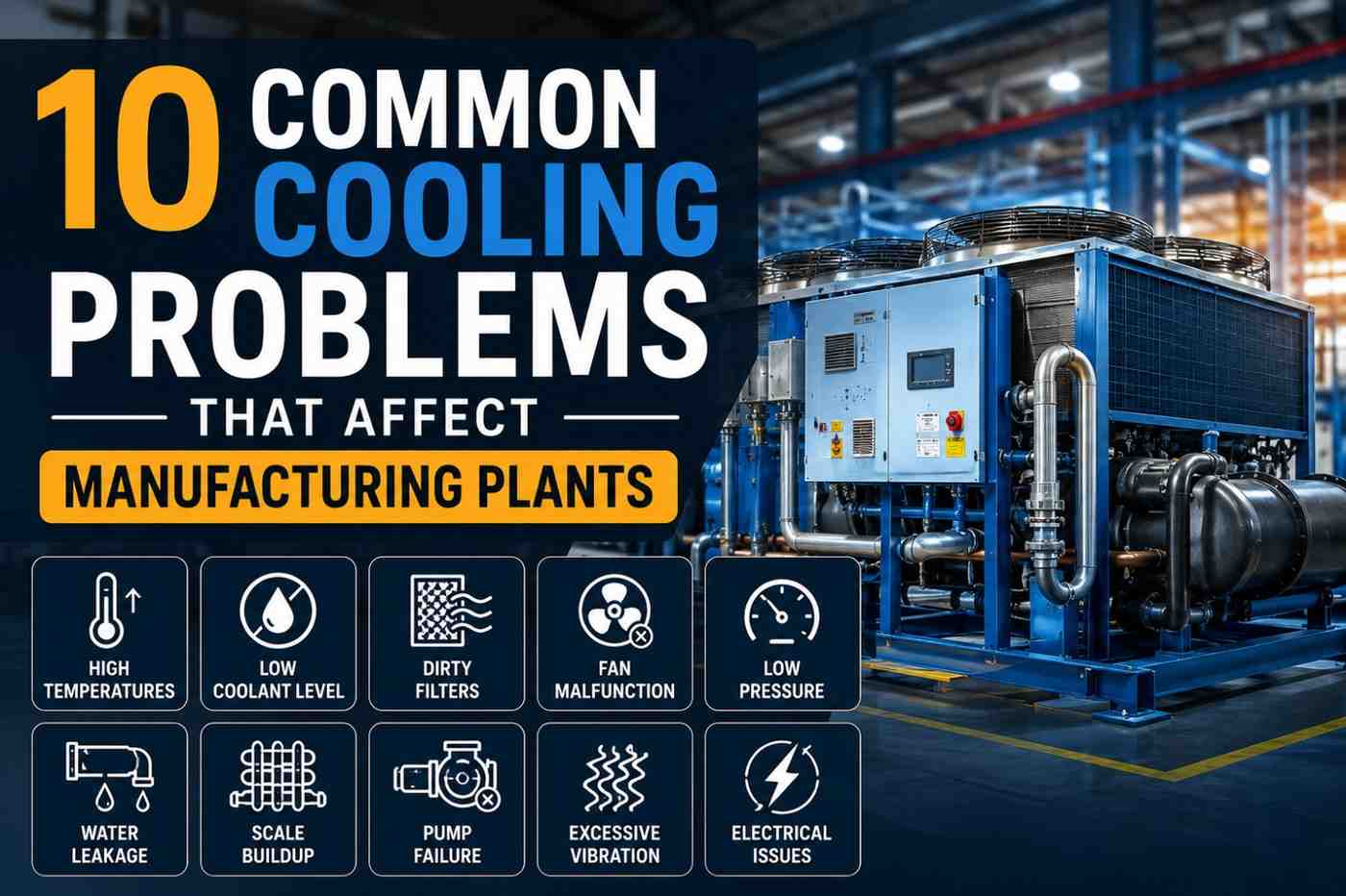
10 Common Cooling Problems That Affect Manufacturing Plants
Manufacturing plants depend on reliable cooling systems to keep machinery operating efficiently, maintain product quality, and prevent costly downtime. Whether you’re managing a food processing facility, pharmaceutical unit, plastic manufacturing plant, or heavy engineering factory, cooling equipment plays a critical role in daily operations.
However, even well-designed systems can develop issues over time due to poor maintenance, incorrect operation, or environmental factors. Ignoring these challenges can lead to increased energy consumption, production delays, expensive repairs, and reduced equipment lifespan.
In this guide, we’ll discuss the 10 most common Industrial Cooling System Problems, their causes, and practical solutions to help your manufacturing plant maintain peak performance.
Why Industrial Cooling Systems Matter
An industrial cooling system removes excess heat generated by machines and production processes. Maintaining the correct operating temperature improves equipment efficiency, prevents overheating, and ensures consistent product quality.
Without regular inspections and preventive care, cooling equipment can lose efficiency, resulting in higher operational costs and unexpected breakdowns.
1. Reduced Cooling Efficiency
One of the most common Industrial Cooling System Problems is poor cooling performance. When equipment fails to reach the required temperature, production quality and machine reliability are affected.
Common Causes
- Dirty heat exchangers
- Blocked condenser coils
- Refrigerant issues
- Poor water circulation
Solution
Do regular checkups, clean the heat exchange surfaces a bit, and see that every cooling component runs within the recommended limits, so nothing feels off.
2. High Energy Consumption
If electricity bills continue to increase without any significant rise in production, your cooling system may be operating inefficiently.
Possible Reasons
- Aging equipment
- Incorrect system sizing
- Dirty filters
- Continuous overloading
Solution
Do routine servicing, and also adopt energy-efficient industrial cooling practices, like variable speed drives and schedules that are optimized for operating, so you end up with that kind of better use of power and less waste, basically.
3. Frequent Equipment Overheating
Overheating machinery is a clear indication that the cooling system isn’t removing heat effectively.
Causes
- Inadequate coolant flow
- Pump failure
- Blocked cooling lines
- Faulty temperature sensors
Solution
Inspect pumps, clean piping, and monitor coolant flow regularly to avoid unexpected shutdowns.
4. Water Quality Issues
Poor water quality can severely impact a Manufacturing plant cooling system by causing scaling, corrosion, and biological growth.
Common Problems
- Mineral deposits
- Rust formation
- Algae growth
- Contaminated water supply
Solution
Use water treatment programs and schedule periodic cleaning to maintain optimal system performance.
5. Refrigerant Leaks
Small refrigerant leaks often go unnoticed until cooling efficiency starts declining.
Warning Signs
- Reduced cooling capacity
- Ice formation
- Higher energy usage
- Unusual operating pressure
Solution
Leak detection should be part of scheduled maintenance, followed by professional repairs and proper refrigerant charging.
6. Pump and Motor Failures
Cooling systems rely on pumps and motors to circulate coolant efficiently. Mechanical failures can interrupt production and damage expensive equipment.
Causes
- Bearing wear
- Motor overheating
- Electrical faults
- Improper lubrication
Solution
Routine Industrial chiller maintenance should include vibration analysis, lubrication, and electrical inspections.
7. Clogged Filters and Heat Exchangers
Dust, dirt, and debris gradually reduce heat transfer efficiency.
Effects
- Lower cooling performance
- Increased operating pressure
- Higher power consumption
- Reduced equipment lifespan
Solution
Replace filters regularly and clean heat exchangers according to the manufacturer’s maintenance schedule.
8. Poor Cooling System Troubleshooting Practices
Many facilities only respond after a breakdown occurs instead of identifying issues early.
Effective cooling system troubleshooting is basically about keeping an eye on temperature, pressure, flow rates, and how the equipment performs, so you catch problems early, before they turn into bigger failures.
Best Practice
Use preventive maintenance schedules and digital monitoring systems for early fault detection.
9. Incorrect Equipment Selection
Choosing the wrong Industrial cooling equipment can result in continuous operational problems.
Common Issues
- Undersized systems
- Oversized chillers
- Improper installation
- Inadequate future capacity planning
Solution
Always evaluate production load, ambient conditions, and future expansion before selecting cooling equipment.
10. Lack of Preventive Maintenance
The majority of Industrial Cooling System Problems can be prevented through regular inspections and servicing.
Preventive maintenance helps identify worn components before failure, improves system reliability, reduces downtime, and lowers operating costs.
Recommended Maintenance Checklist
- Inspect pumps and motors
- Clean heat exchangers
- Check refrigerant levels
- Monitor water quality
- Replace clogged filters
- Verify electrical connections
- Test system controls
- Record operating temperatures and pressures
Best Practices to Prevent Cooling System Failures
Manufacturers can significantly improve cooling performance by following these preventive measures:
- Schedule routine inspections throughout the year.
- Train operators to identify early warning signs.
- Monitor energy consumption regularly.
- Maintain proper water quality.
- Replace worn components before failure.
- Keep maintenance records for trend analysis.
- Upgrade outdated equipment when necessary.
These practices help improve reliability while reducing long-term operating expenses.
Choosing the Right Cooling Solution
Every manufacturing facility has different cooling needs, based on production capacity, the surrounding operating environment, and the actual process demands. Picking the best system and keeping it properly running can meaningfully cut down unexpected breakdowns and also boost productivity, in a pretty steady way.
For facilities that need a high volume of cooling, it helps to really get why a water cooled chiller system works well, because it can boost energy efficiency in big-scale operations. At the same time, companies that want something adaptable and generally more budget-friendly can look at an air cooled chiller in India, depending on how they plan to install it and what the actual operating conditions are like day to day.
Final Thoughts
Unexpected downtime that happens because of cooling failures can mess up production, bump up operational costs, and also shorten the life of equipment. When you understand the most common Industrial Cooling System Problems, manufacturers can take preventive action early on, before small issues turn into big, expensive repairs.
By investing in routine servicing, adopting energy-efficient industrial cooling methods, promptly troubleshooting cooling systems, and selecting the right industrial cooling equipment, manufacturing plants can boost overall efficiency, reduce energy costs, and keep operations running without interruptions. A more proactive maintenance approach, not just extending the equipment lifespan, but also helps deliver better productivity and supports long-term business success.
If you’re looking for dependable industrial cooling solutions, Earth Cooling System is there with high-quality cooling equipment, plus expert guidance and steady support to help businesses keep things running, steady, and uninterrupted. And whether you’re dealing with system selection, upkeep, or performance optimization (some people call it tuning), Earth Cooling System stays focused on delivering cooling solutions that fit the specific needs of today’s manufacturing facilities.

Leave a Reply