

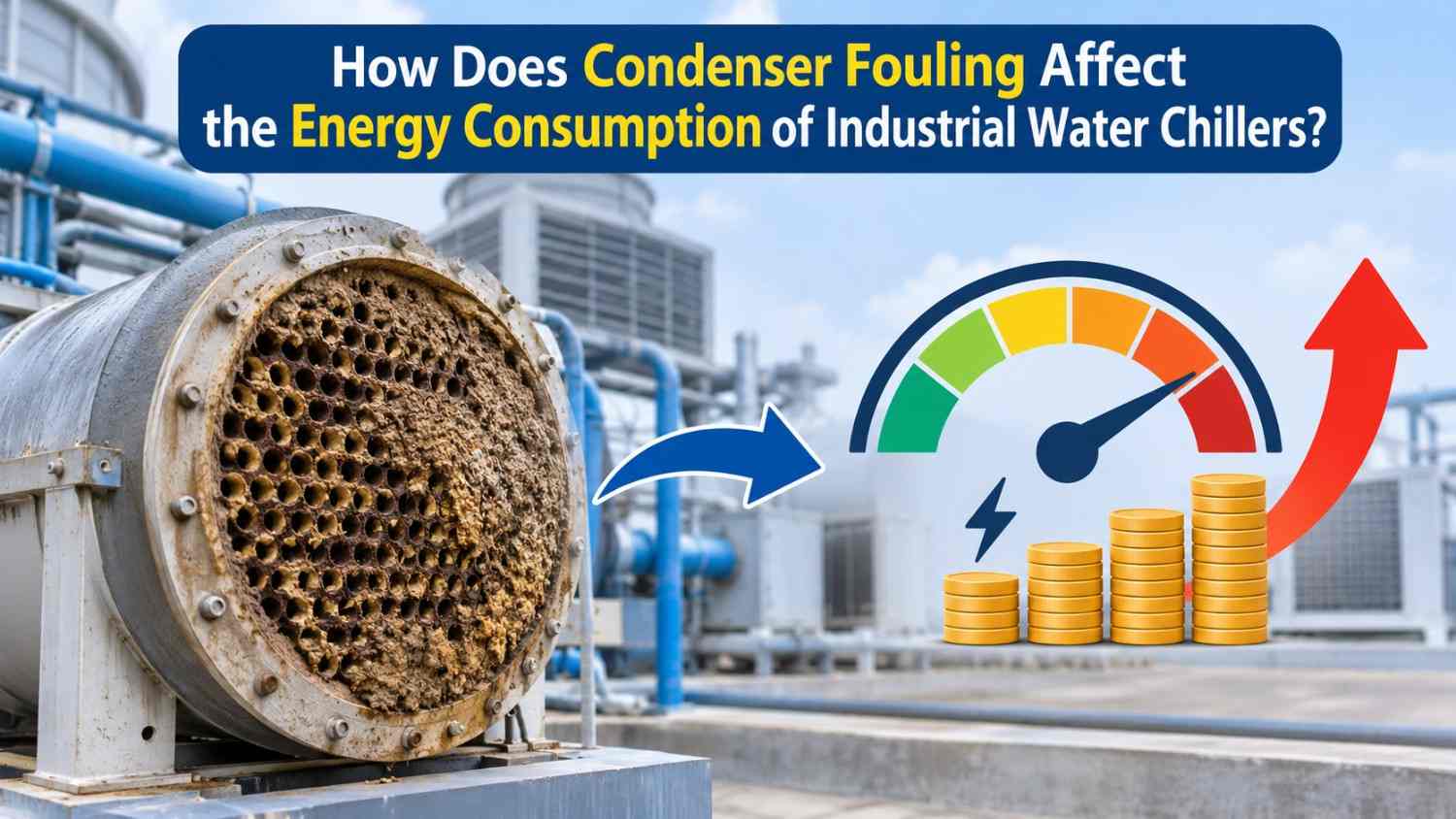
How Does Condenser Fouling Affect the Energy Consumption of Industrial Water Chillers?
The operation of an industrial water chillers could go on without the user realizing the machine has been using more power than needed. Condenser fouling may be one of the factors that cause such inefficiency in the process. Mineral deposits, dust, and other debris could accumulate inside the condenser tubing, thereby reducing heat transfer efficiency. Such problems are typical of Industrial water cooled screw chiller in India that rely on the efficiency of cooling water circulation. Learn about Condenser Tube Scaling in Chillers and how to maintain your heat transfer surfaces.
Earth Cooling Systems offers industrial and water cooled chillers and also gives installation and yearly maintenance services. Let us know why condenser fouling is important and its impact on the chiller’s daily performance.
1. What Is Condenser Fouling in an Industrial Chiller?
Condenser is an essential component in the refrigeration system. The purpose of the condenser is to reject the heat gained from the chilled water or process fluid, and the heat rejected due to compression in the compressor, to the cooling medium.
In water-cooled chillers, condenser water flows through the condenser heat exchanger and carries heat away from the refrigerant.
As time progresses, there may be an accumulation of unwanted materials that accumulate on the surface of the water-side. Some of the contaminants that may accumulate include mineral scale, sediment, corrosion and even bio-fouling.
The deposition rates depend on water quality, cooling tower operations, and maintenance activities.
Calcium carbonate deposits, for instance, may be formed due to water quality and operational conditions that are conducive to formation of minerals. Such deposits serve to provide yet another hindrance between the water and the heat transfer surface.
2. How Condenser Fouling Reduces Heat Transfer Efficiency
Heat transfer is the main function of a condenser. If there are fouling deposits on the tubes, then these increase the heat transfer resistance.
To put it simply, the refrigerant has to give off heat not only through the walls of the condenser, but through another layer that is not supposed to be there.
It influences the efficiency of heat transfer in the condenser as a whole. The system will have difficulties with rejecting the necessary amount of heat in normal conditions.
Due to fouling, the condenser works at a higher condensing temperature and pressure. It consumes more energy or produces less cooling capacity.
The Earth Cooling System understands the significance of maintaining their equipment since it is part of the cooling system for industrial processes.
3. Why Fouling Increases Compressor Power Consumption
In case the condenser does not remove the heat effectively, there may be an increase in the pressure and temperature of the condensing refrigerant. It results in an increase in the pressure differential that the compressor has to run against. The compressor thus works harder than normal.
In such a case, the power used by the compressor could increase even if the amount of cooling needed remains constant in the manufacturing process.
This is one of the primary reasons why it is essential for companies to pay attention to the gradual decline in chiller performance. The equipment will continue producing chilled water, but its power consumption increases because of condenser fouling.
The degree to which power usage increases is dependent on a number of factors including the type of chiller, load, and condenser fouling, among others.
4. Common Signs of Condenser Tube Scaling in Chillers
Condenser fouling normally comes about slowly, such that operators cannot detect the problem right away. However, alteration in operation will serve as an indication for inspecting the heat exchanger.
Some common warning signs include:
- Higher condensing pressure: This could be due to the condenser being unable to dissipate heat effectively.
- Greater electric consumption by compressor: The equipment may use more electricity to achieve desired cooling.
- Poor cooling effectiveness: The cooling equipment may not be able to perform according to expectations.
- Higher condenser approach temperature: Change in this temperature difference can be an indication of poor heat transfer efficiency.
- Unusual operational characteristics: Frequent alarms and abnormal operation readings may need technical assessment.
These observations need to be compared with those recommended by the manufacturer as optimal operating conditions. A warning signal does not necessarily mean that there is fouling because various other problems can give rise to identical conditions.
5. The Role of Cooling Water Quality and Cooling Tower Performance
A cooling tower is common in water cooled systems as a means of heat rejection. In the process of cooling water within the cooling tower, there is exposure of water to air whereby the presence of air-borne contaminants could lead to mineral accumulation due to evaporation.
Therefore, water treatment is a critical element in the process of industrial cooling systems. Water treatment experts can analyze water quality and advise on the appropriate water treatment methods based on operating parameters.
Earth Cooling System is an organization that provides industrial cooling systems such as FRP cooling towers and also maintains water treatment and cooling tower equipment.
When Industrial Water Chillers in Delhi, coordination between cooling tower repair and condenser maintenance can solve broader cooling issues.
6. Why Regular Condenser Tube Cleaning Matters
Cleaning the condenser tubes helps remove deposits that interfere with heat transfer. However, the cleaning method should match the type of fouling and the condenser manufacturer’s recommendations.
Mechanical cleaning can remove loose deposits and certain types of scale through suitable tube-cleaning tools. Chemical cleaning may help remove deposits that mechanical methods cannot address easily. A qualified service professional should select the appropriate method after inspecting the equipment.
Improper cleaning can damage tube surfaces or create additional maintenance problems. Therefore, operators should avoid using aggressive chemicals or unsuitable cleaning tools without technical guidance.
Earth Cooling System provides annual maintenance services for cooling equipment, including chillers and cooling towers. Planned maintenance can help identify developing problems before they lead to more serious operating issues.
7. Practical Ways to Maintain Chiller Energy Efficiency
Condenser cleaning is important, but it should form part of a wider maintenance approach. Industrial cooling equipment needs attention across the condenser, cooling tower, water circulation system, and refrigeration circuit.
Regular performance monitoring helps operators recognise changes before they become major concerns.
The following practices can support better maintenance:
- Monitor operating conditions: Review condenser pressure, entering and leaving water temperatures, and compressor operating data.
- Maintain cooling water quality: Follow an appropriate treatment programme based on actual water conditions.
- Inspect water circulation: Check pumps, strainers, valves, and flow conditions for possible restrictions.
- Schedule heat exchanger tube cleaning: Follow inspection findings and manufacturer recommendations rather than relying on guesswork.
- Review cooling tower performance: Check for water distribution issues, deposits, and maintenance requirements.
These practices support better chiller performance monitoring and help maintenance teams make informed decisions.
Businesses using a water cooled screw chiller should also follow the equipment manufacturer’s operating and maintenance instructions.
8. Why Professional Chiller Maintenance Should Not Be Ignored
Industrial chillers often support processes that depend on stable temperature control. A condenser problem can therefore affect more than electricity bills. It may also influence production conditions, equipment reliability, and maintenance planning.
Professional inspection helps identify whether rising power consumption comes from condenser fouling or another operating issue.
Earth Cooling System manufactures industrial cooling equipment across different chiller categories. Its services include installation, testing, commissioning, and annual maintenance support.
The company also offers water-cooled screw chillers and other industrial cooling solutions. Choosing suitable equipment and maintaining it according to operating requirements can support dependable cooling system operation.
Frequently Asked Questions About Industrial Water Chillers
1. How does condenser fouling affect industrial water chillers?
Condenser fouling reduces heat transfer efficiency by creating deposits on condenser tube surfaces. This can increase condensing pressure, raise compressor power consumption, and reduce cooling performance.
2. What causes condenser tube scaling in chillers?
Condenser tube scaling commonly occurs due to mineral deposits, particularly calcium carbonate, in cooling water. Poor water quality management and inadequate maintenance can contribute to scale formation.
3. How can condenser fouling be prevented in industrial chillers?
Regular condenser inspections, proper cooling tower water treatment, maintaining cooling water circulation, and timely tube cleaning can help control fouling and maintain chiller performance.
4. Why is regular industrial chiller maintenance important?
Regular maintenance helps identify condenser deposits, water circulation problems, and other operating issues before they affect equipment performance. Earth Cooling System provides industrial chiller installation and annual maintenance services to support cooling system upkeep.
Keep Your Industrial Cooling System Running Efficiently With Earth Cooling System
Condenser fouling may look like a minor maintenance issue, but its effect on heat transfer can increase compressor workload, raise electricity consumption, and affect cooling capacity. Proper cooling water circulation, regular inspections, suitable water treatment, and timely heat exchanger tube cleaning all contribute to better Industrial Water Chillers performance.
For businesses that depend on uninterrupted process cooling, ignoring condenser maintenance can become an expensive decision.
Earth Cooling System offers industrial chillers, water-cooled screw chillers, cooling towers, installation services, and annual maintenance solutions. Explore our products and services through our official website, visit our Google Business Profile to learn more about our business, and contact our team to discuss your industrial cooling requirements.

Leave a Reply